


Grace A. Lewis
Cloud and Edge Computing
Software Engineering Institute, Carnegie Mellon University, Pitsburg, United States

Grace A. Lewis is a Principal Researcher at the Software Engineering Institute (SEI) at Carnegie Mellon University (CMU). She is the deputy lead for the Advanced Mobile Systems (AMS) initiative and the principal investigator for the Edge-Enabled Tactical Systems research project.
Her current interests and projects are in mobile computing, cloud computing and service-oriented architecture (SOA). Her latest publications include multiples papers and articles on these subjects and a book in the SEI Software Engineering Series. She is a member of the executive committee for the Master in Software Engineering program at CMU, a Member-at-Large for the IEEE Technical Council on Software Engineering (TCSE), and a member of organizing committees and program committees for multiple conferences. Grace holds a B.Sc. in Systems Engineering and a Specialization in Business Administration from Icesi University in Cali, Colombia; and a Master in Software Engineering from CMU. She is currently a PhD candidate at the Department of Computer Science (Faculty of Sciences) at VU University Amsterdam.
Grace A. LewisCloud and Edge ComputingHausi A. Müller
Self-Adaptive Systems and Quantum Computing
University of Victoria, Victoria, Canada
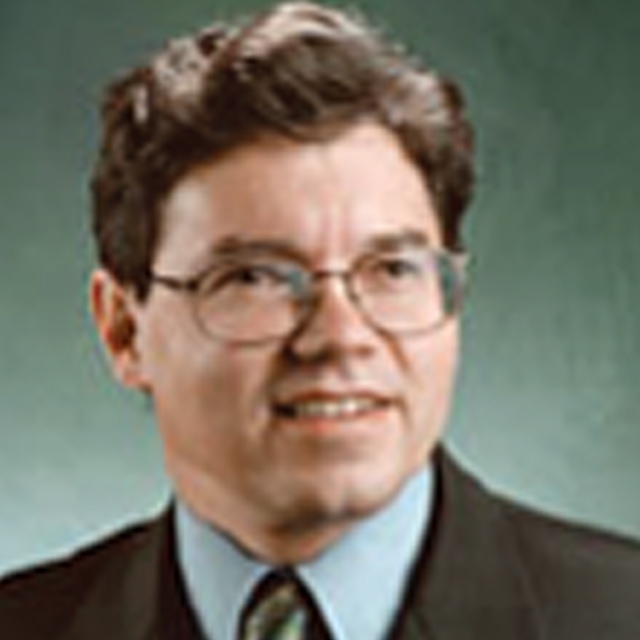
Hausi A. Müller is a Professor of Computer Science at the University of Victoria, British Columbia, Canada, and an Adjunct Professor at Icesi University in Cali, Colombia. He was Associate Dean of Research, Faculty of Engineering (2009-2019). He is Co-Chair IEEE Future Directions Quantum Initiative and serves on the IEEE Conferences Committee (2019-2021). He is General Chair of IEEE Quantum Week, the inaugural IEEE International Conference on Quantum Computing & Engineering (QCE). He was Vice President of IEEE Computer Society (CS) Technical and Conferences Activities (T&C) Board (2016–2018), member of the CS Board of Governors (2015–2017), chair of TCSE, the CS Technical Council on Software Engineering (2011-2015). He received an IEEE CS Golden Core Member Award (2016) and IEEE TCSE Distinguished Service Award (2016). In 2011 Dr. Müller’s research team won the IBM Canada CAS Research Project of the Year Award. With his research group, he collaborates extensively with industry as an international expert in software engineering, software evolution, quantum computing, adaptive systems, IoT, and intelligent cyber-physical systems.
He is a principal investigator of an IBM CAS Project on Quantum Problem Solving and Algorithm Design on the IBM Q platform. He is a principal investigator of an NSERC Strategic Partnership Grant on Middleware Framework and Programming Infrastructure for IoT Services and of an NSERC Collaborative Research and Training Experience (CREATE) Grant on Dependable Internet-of-Things Applications (DITA). He was a principal investigator in the NSERC Strategic Research Network for Smart Applications on Virtual Infrastructure (SAVI). The main research goal of the SAVI Network was to address the design of future applications platforms built on a flexible, versatile, and evolvable infrastructure that can readily deploy, maintain and retire the large-scale, possibly short-lived, distributed applications that will be typical in the future applications marketplace. The SAVI partnership involved investigators from nine Canadian universities and 13 companies bringing together expertise in networking, cloud computing, applications, and business.
Hausi A. MüllerSelf-Adaptive Systems and Quantum ComputingUlrike Stege
Quantum Computing
University of Victoria, Victoria, Canada
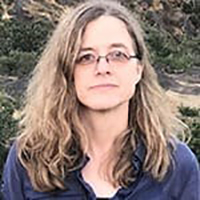
Ulrike is an associate professor and director of undergraduate studies for the Department of Computer Science at the University of Victoria. Her main research interests are interdisciplinary, including the areas of Quantum Computing, Parameterized Complexity, Computational Biology, Cognitive Science & Human Problem Solving, and Computer Science Education.
Ulrike StegeQuantum ComputingMarin Litoiu
Cloud Computing
University of York, Toronto, Canada
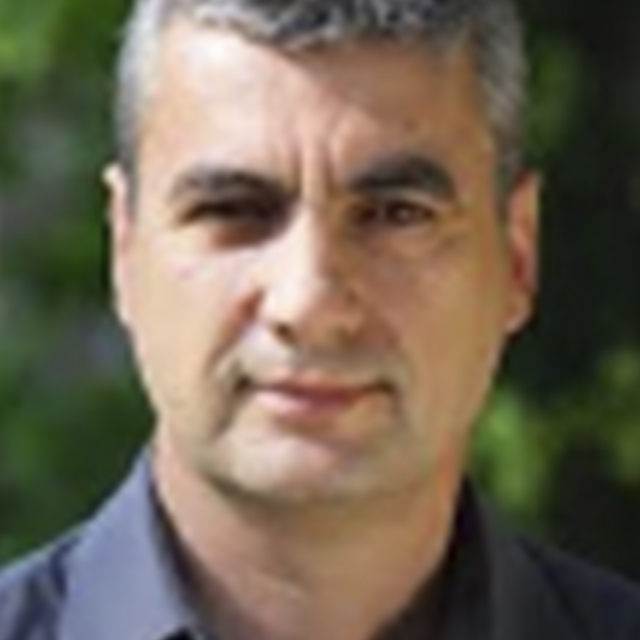
Marin Litoiu is an Associate Professor in the School of Information Technology and the Engineering Department at York University, Canada. He is a principal investigator in the NSERC Strategic Research Network for Smart Applications on Virtual Infrastructure (SAVI), a Visiting Scientist at the IBM Software Lab in Canada, Director of Research for the Centre of Excellence for Research in Adaptive Systems (CERAS), and Chair of the Board of Directors for the Consortium for Software Engineering Research of Canada (CSER). Marin Litoiu was General Chair of the 8th IEEE/ACM Symposium on Software Engineering for Adaptive and Self-Managing Systems (SEAMS 2014), co-located with the 35th International Conference on Software Engineering (ICSE).
He has served in the program committees of several top-ranked international conferences and journals such as ACM Transactions on Autonomous and Adaptive Systems, IEEE Transactions on Software Engineering, and IEEE Software. In 2011 he was Chair of the NSERC Strategic Projects Committee, Information and Communication Technologies in Canada. His research interests include smart applications in virtual infrastructures, connected vehicles and smart transportation, service-oriented computing, performance engineering, and cloud computing, in particular service management for the cloud and capacity planning for data centers.
Marin LitoiuCloud ComputingGabriel Tamura
Self-Adaptive Systems and Continuous Software Engineering
Universidad Icesi, Cali, Colombia
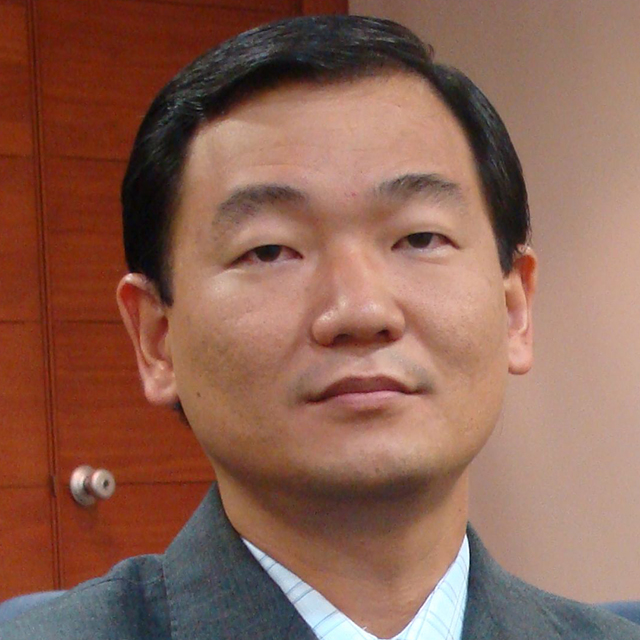
Gabriel Tamura is a professor and leader of the i2t/DRISO research subgroup of the Department of Information Technology and Communications at Universidad Icesi (Cali, Colombia). He has been a visiting scientist at the INRIA Lille Nord Europe Research Center (France), at the Fundamental Computer Science Laboratory (LIFL - UMR 8022 CNRS and the University of Lille 1) and the Rigi Research Group of the University of Victoria (Canada).
He obtained his Ph.D. in Software Engineering from Université de Lille 1 (Lille, France) and Universidad de Los Andes (Bogotá, Colombia), and has an M.Sc. and a B.Eng., both in Systems and Computer Engineering. His current research interests include the engineering of context-adaptive software systems and the evolution of software architectures for large-scale data processing systems.
Gabriel TamuraSelf-Adaptive Systems and Continuous Software EngineeringNorha M. Villegas
Self-Adaptive Systems and Digital Twin
Universidad Icesi, Cali, Colombia
 Dr. Villegas is a Faculty and Researcher, and Head of the Software Systems Engineering Professional Program at Icesi University, Colombia, and an Adjunct Professor at the Department of Computer Science, University of Victoria, Canada.
Together with her research groups at Icesi University (DRISO Research Group - Colombia) and University of Victoria (Rigi Research Group - Canada), she investigates the application of Software Engineering models, techniques and architectures to the development of context-aware, self-adaptive and self-managing systems. Her main interests are the application of feedback loops and autonomic computing features to the implementation of infrastructures able to support the dynamic adaptation and evolution of context-aware applications, by provisioning suitable context services. She is also highly engaged in Engineering Education research.
Dr. Villegas conducted her PhD under the supervision of Prof. Hausi Müller, in the Department of Computer Science, at University of Victoria (2009-2013).
Specialties: Context-Aware systems, Dynamic Context Management, Self-adaptive and self-managing systems, Software maintenance and evolution, Engineering Education.
Applications: Electronic Commerce, SOA governance, health care, smart cities.
Norha M. VillegasSelf-Adaptive Systems and Digital TwinCarlos Díaz
Internet of Things
Universidad Icesi, Cali, Colombia

Andrés is a Master in Computer and Telecommunications Management, Specialist in Networks and Communications, and Electronics Engineer. His main interest is the development of telecomputing systems based on embedded devices and sensor networks (e.g. Internet of things, Smart energy 2.0, 6lowPAN, M2M communications, ubiquitous computing).
Andrés was the director of development of new projects at INTEGRATIC SAS, a company focused on research, innovation, and development of devices and applications to provide services on Wireless Sensor Networks. Andrés has won several entrepreneurship awards at the regional and national level for the development of innovative telecomputing systems in the commercial sector.
Carlos DíazInternet of ThingsJavier Díaz
Machine Learning
Universidad Icesi, Cali, Colombia
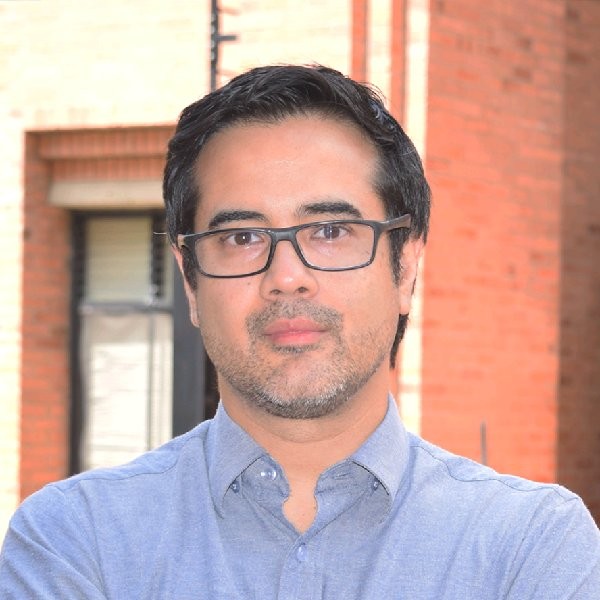
Dr. Díaz believes that business analytics offers an incredible set of tools that enable organizations to achieve strategical goals by optimizing processes, solving problems and discovering new and disruptive opportunities of creating value from data.
With more than 15 years of experience in the field of artificial intelligence in France and Colombia, Javier has gathered considerable experience applying machine learning to real-world problems in several sectors (e.g., banking and finance, telecommunications, retail, health, and education), either working directly for a company (Orange France Télécom, Sociéte Générale, Banco Falabella) or as a consultant (Altran, Icesi University).
Dr. Díaz has also had the chance to work as a university professor and applied analytics researcher, first as part of the LIP6 lab in Paris, and now as a Faculty member of the School of Engineering at Universidad Icesi, where he is also the director of the Masters in Data Science program. Furthermore, Javier participates in conceiving and directing data analytics projects for his industrial partners, and as an advisor on how to develop and integrate business analytics capabilities into the organizational structure.
Javier DíazMachine LearningÁlvaro Pachón De La Cruz
Internet of Things
Universidad Icesi, Cali, Colombia
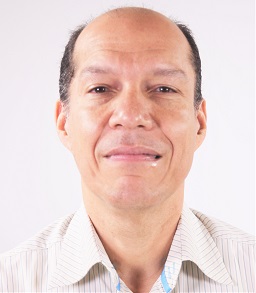
Álvaro is a professor and Head of ICT Department at the Icesi University, Colombia. He received his B.S. degree in Computer Engineering, in 1990, from Icesi University, his D.E.A. in Information Technologies from Vigo University in 2005. He is a Ph.D. in Ingeniería Telemática from Vigo University.
Alvaro Pachón De La CruzInternet of ThingsLina M. Quintero
Cloud Computing
Universidad Icesi, Cali, Colombia

Telematic Engineer. She currently works as an instructor and director of the undergraduate program in Telematic Engineering at Universidad Icesi, Colombia. Her main interests are cloud computing, computer vision, ML and engineering learning. She has a master's degree in computer science and telecommunications with an emphasis on research, where she investigated the use of computer vision as a tool for monitoring patients infected with Leishmaniasis. She is currently completing her second master's degree in Data Science. Lina is AWS Certified Cloud Practitioner and leads the AWS Academy programs, AWS Educate, among other Cloud initiatives at Icesi.
LinkedIn
Lina M. QuinteroCloud ComputingLuis F. Rivera
Digital Twin
University of Victoria, Victoria, Canada

Luis is a PhD student and a research and teaching assistant at University of Victoria. He holds a Master's degree (M.Sc.) in Informatics and Telecommunications and a Bachelor's (B.Eng.) in Software Systems Engineering. His research interests include (but are not limited to): Digital Twins, Models at Run-time, Model-Driven Engineering (MDE), Model-Driven Architecture (MDA), and Software Engineering at Run-Time.
Luis F. RiveraDigital TwinPrashanti Angara
Quantum Computing
University of Victoria, Victoria, Canada
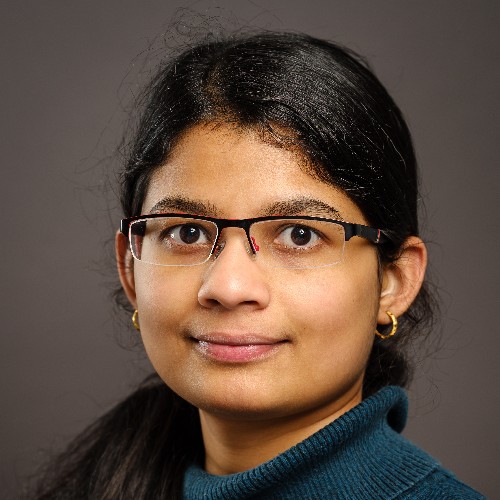
Priya is a PhD student at the Rigi Lab, University of Victoria, supervised by Profs. Hausi Müller and Ulrike Stege. Her interests are in the area of Quantum Computing, Quantum Algorithms and Artificial Intelligence. For her Master's degree, she worked with conversational agents, their frameworks and methodologies to build them. She finished her undergrad in India in the field of Computer Science and worked at Oracle Corporation prior to moving to Canada. In her free time, she does photography and plays badminton.
Prashanti PriyaQuantum ComputingMiguel Jiménez
Continuous Software Engineering at Run-time
University of Victoria, Victoria, Canada

Miguel is a Ph.D. candidate at the University of Victoria under the supervision of Drs. Hausi Müller and Gabriel Tamura. He has industry experience and academic training in development for web and cloud, language engineering, and applied research. His area of research is Software Engineering with a focus on the design and development of infrastructures for self-adaptive systems. Funded by NSERC and IBM, Miguel's current research project focuses on automated evolution of cloud systems through quality-driven continuous experimentation. In 2019, Miguel was nominated for IBM Advanced Studies Project of the Year among 70+ projects, and IBM Advanced Studies Student of the Year among 120+ graduate students. Miguel holds a Bachelor degree in Software Systems Engineering (2014) and a Master of Science degree in Informatics and Telecommunications (2016) from Universidad Icesi (Colombia).
Miguel JiménezContinuous Software Evolution at Run-time