
The belives on the asphalt
Sacred sites as means of appropriation of the public space in México city
DOI:
https://doi.org/10.18046/retf.i14.3528Keywords:
Espacio público, ciudad de méxico, mexico, sacralizacion espacial, sacralización, altares urbanos, urbano, espacio, religiónAbstract
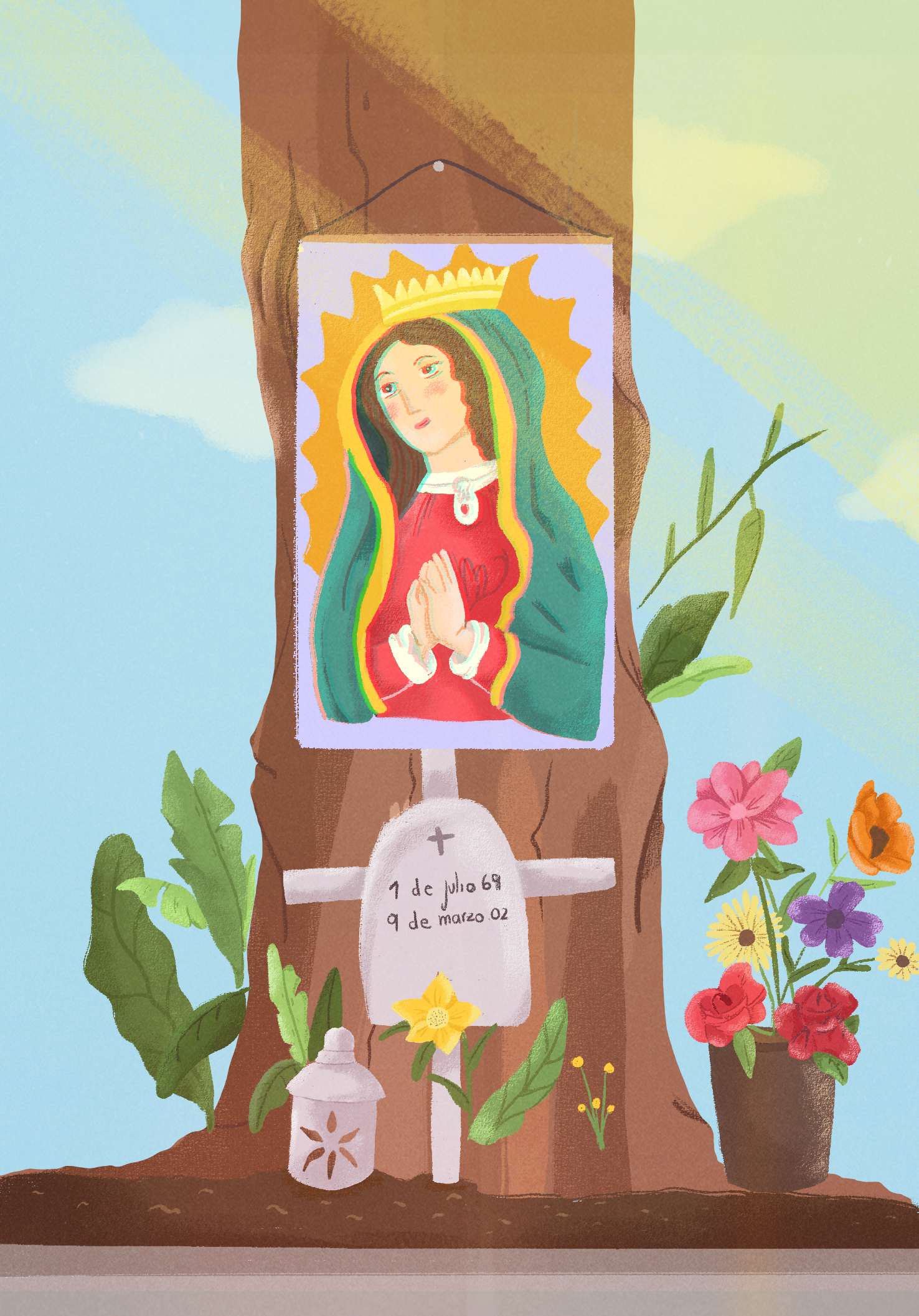
This paper explores how residents of México City appropriate public spaces by transforming local places into sacred sites. This sacred quality is achieved by installing crucifixes, altars and niches for virgins and saints. These symbols of folk religion not only adorn public sites, but also offer protection, serve as mnemonic devices and manage spatial liminality -all this in a chaotic city where public spaces are considered to be almost extinct. These elements --faces, proper names, common religious symbols- mark “anonymous” urban spaces, generating meaning and memory for inhabitants. In this fashion, public spaces become a scenario for projecting personal elements of neighborhood groups
Downloads
Downloads
Published
Issue
Section
License
Trans-pasando Fronteras provides immediate open access to its content on the principle that making research freely available to the public supports a greater global exchange of knowledge.
© Authors hold copyright and publishing rights without restrictions but in accordance with the CC license.
All the material in this publication can be reproduced as long as reference is made to title, author and institutional source.